If you know me well, you should know that I’m a big fan of secondhand items. And if you didn’t know that, now you definitely know me well.
The trend of buying used clothing is not new; it has been around for a long time. Initially, it was more popular among fashion-savvy individuals who understood style. However, it has gradually become a part of everyone’s life, especially for those who care about the environment. There’s nothing shameful about getting tired of your clothes, their colors, or styles. After all, we don’t stay the same; we evolve and change. Today, I might want to wear something colorful, and tomorrow, I might prefer something beige. A few months ago, I told my friend that my least favorite color is navy, and what do you think happened? A week later, I bought some navy items and became obsessed with the navy. I’m sure it doesn’t work like this for everyone, but for me, someone who grew up without the opportunity to buy new clothes because there was simply nowhere to buy them and no budget for it – thanks to my mom for sewing my clothes, including my prom dress – hunger for different styles is probably a normal story. Plus, working in the fashion industry for ten years has made me attuned to trends, even in outdoor sports. Currently, it’s all about blue and brown, even in outdoor sports, and I want to look stylish when I’m active. But what I don’t want is to accumulate a ton of stuff. Living in a small apartment, hello immigrant life, means I have to keep my running wardrobe within the IKEA dresser. The first drawer is for shorts, the second for t-shirts , and the third for warm running clothes, while the fourth contains socks and sports bras. As I mentioned, space is limited, as is the budget, and the prices of running gear can be quite steep.
I can’t say that shopping secondhand is always the solution, but often, very often, you can find really cool and useful items there. Interestingly, over the past year, there has been a trend of brands reselling their own items, and that’s exactly what I wanted to discuss today. We all know that Patagonia was the first brand where you could return old items for credit, and they would sell them on their website, and you could use your credit to buy something new. In general, I find this system ideal, but like everything else, it has its pros and cons. But let’s talk about which other brands are joining in and reselling used items.
Lululemon launched its program a couple of years ago, and you can really find everything you need there. The coolest thing is that you can find items that have captured your heart but are no longer in production, which Lululemon often does. So it’s a paradise for fans and connoisseurs. However, the platform has some drawbacks, as we’ll discuss later. The search function and sorting can be problematic, and the item descriptions can be confusing. For example, shorts with a 6-inch inseam might be listed under the same category as those with 8 or 10-inch inseams.
Not long ago, I came across the ON Running program. I can’t say much about it yet because I haven’t tried selling items there, but I noticed that many items in the program are priced higher than the sale prices on their website, which doesn’t make much sense. Overall, though, I think the concept is great.
Let see which brands have the similar programs and also why we should like it or not.
Pangaia: Pangaia Rewear
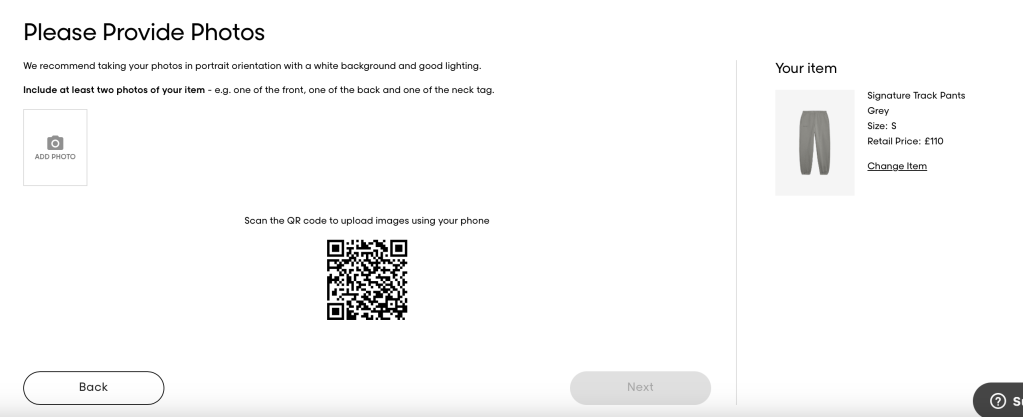
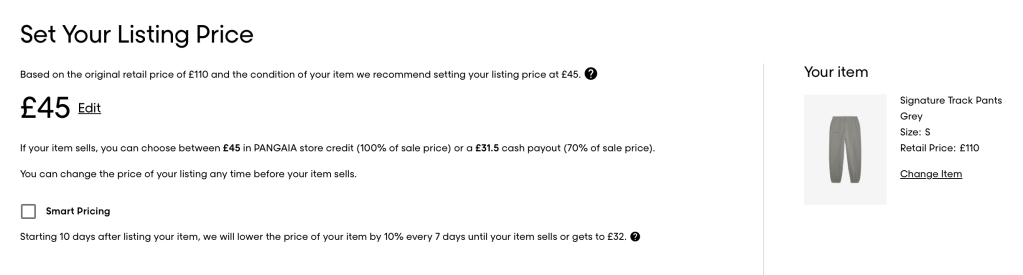
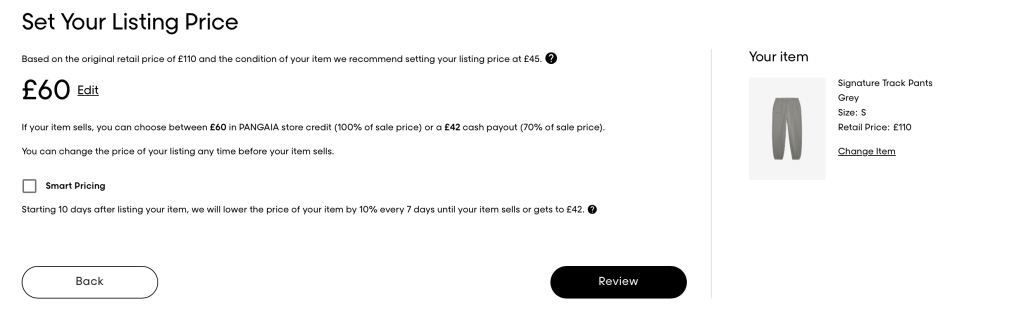
Pangaia, one of my favorite brands, has also launched a program, but it’s currently only available in the UK. Hopefully, it will expand to other countries soon. The concept seems excellent, and the best part is that you don’t have to send your items to the brand. You can take photos yourself, list the items, and set the prices. Even better, you can get 70% of the sale price in cash or 100% in store credit, which is quite fair.
Seems like great way buy and sell. As I am located in the US I haven’t try the program yet and can not tell you how exactly it works.
REI: REI Used
REI, the outdoor store, is doing something different. They offer both used and returned gear in stores, which can be a real treasure hunt. You’d be amazed at how many people buy things and then return them with minimal use, and now you can buy them again. Unfortunately, these items are non-refundable, but the prices are reasonable. You can find the deals in most stores across the country.
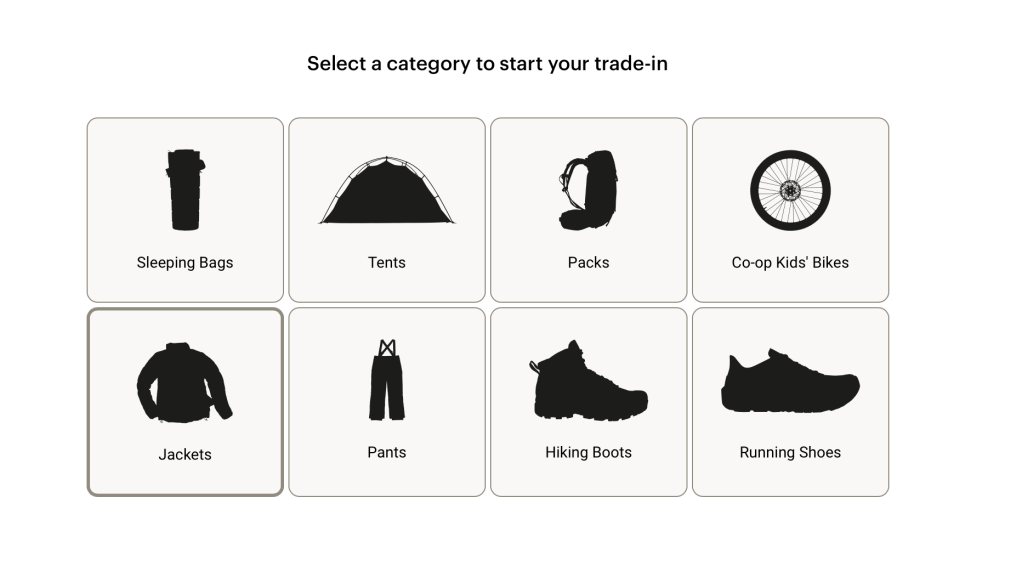
Buy use online.
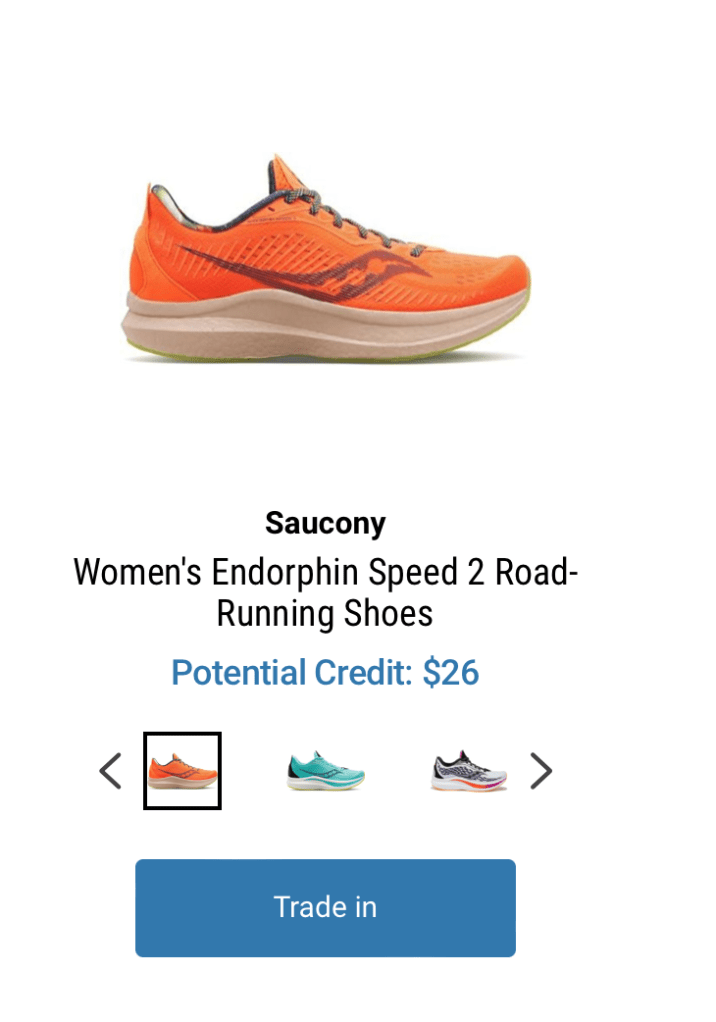
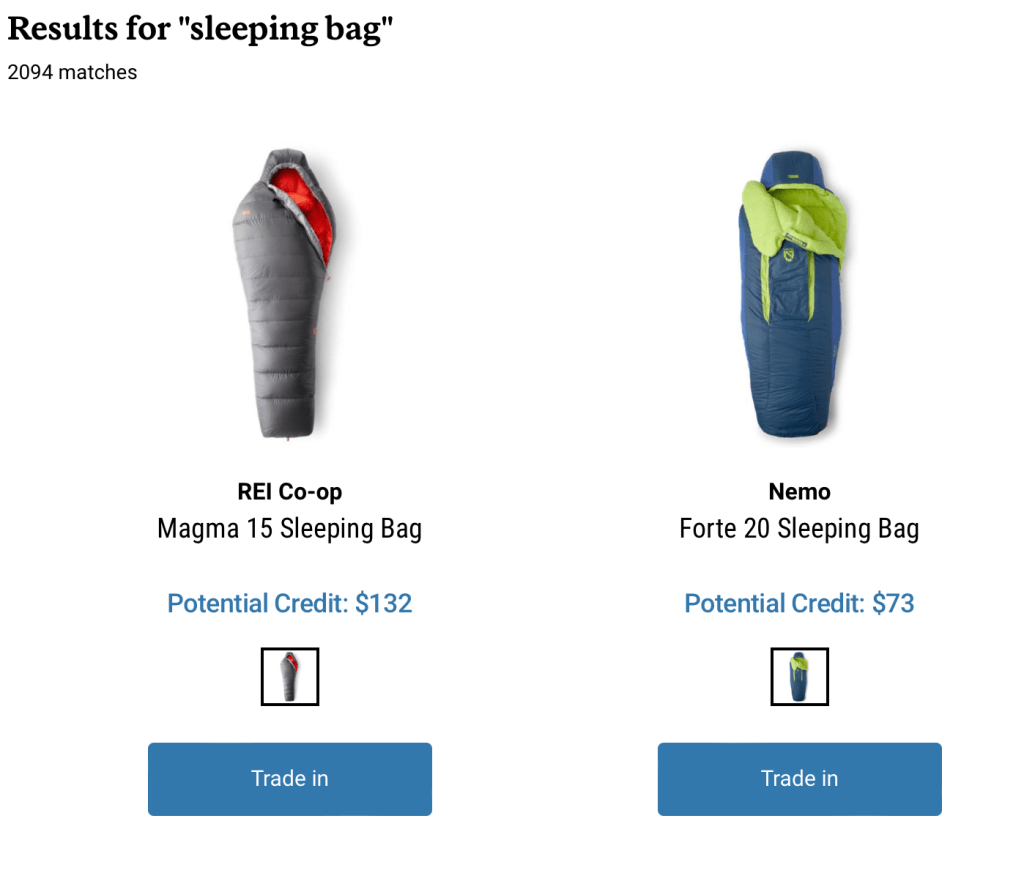
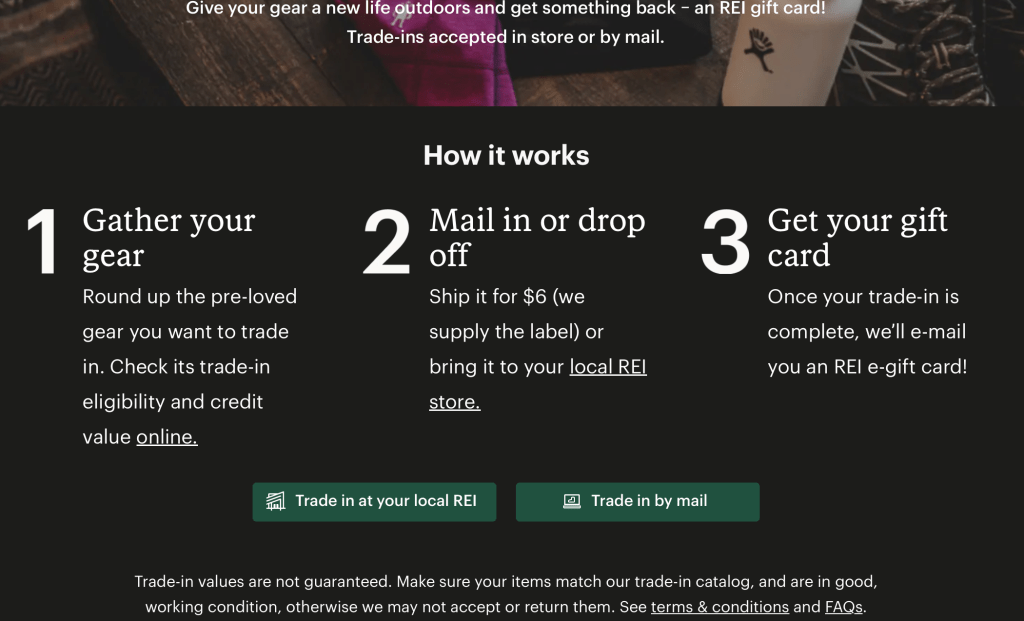
Online you can sell and buy gear, so it is a bit different from what you can find in store, but prices are great. You can see your potential credit online and decide if it worth it. You’ll get only gift card, no cash. Prices very friendly for buyers and also sellers get back some money as well.
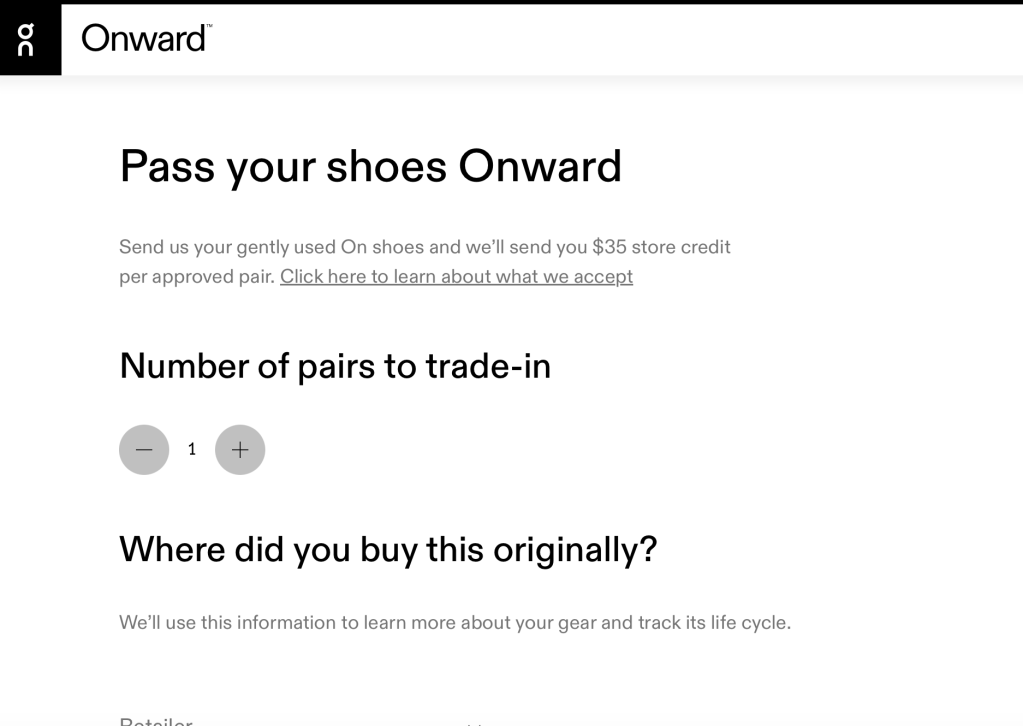
ON Running: ONward by ON Running
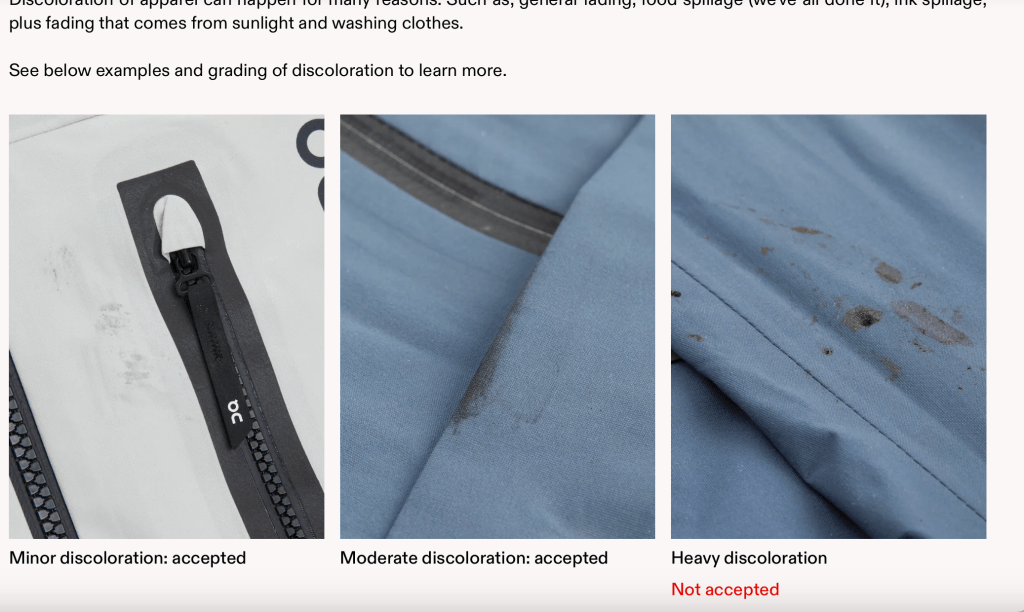
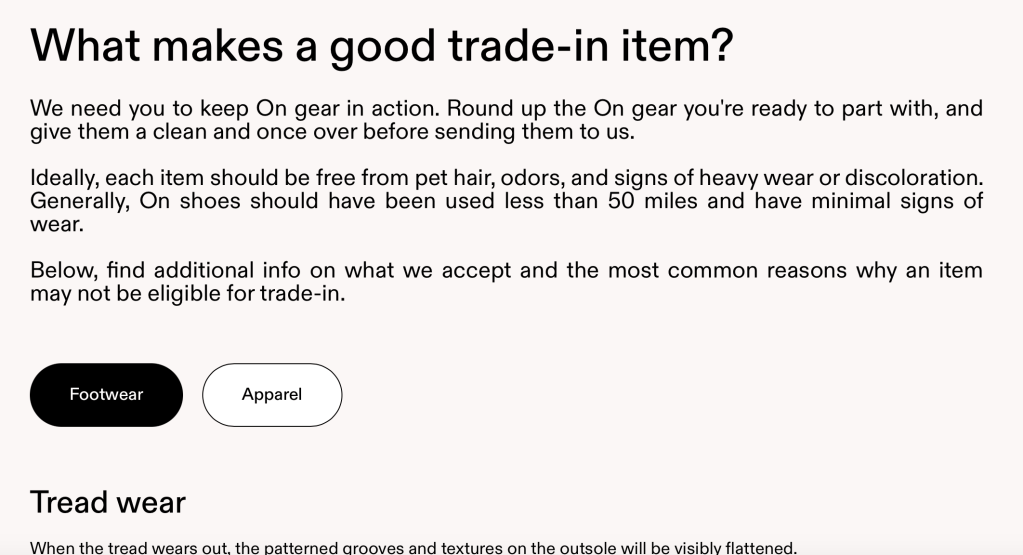
The ON program is an interesting idea, but it seems to need more work. However, they have clear guidelines on what is acceptable and what is not. The website is user-friendly and well-organized. Unfortunately buying used seems a bit not reasonable here, as you can find some gear cheaper at sale section. Prices should definitely match those in the sale section. I couldn’t find information on what they do with the money they make from reselling items, though. Some information from website: “For each eligible item, you’ll receive a gift card to spend towards your next purchase on the Onward platform or at on-running.com. Your gear will then be listed for sale on Onward, ready to find its new home. Anything that isn’t eligible will be donated or recycled.”
For sellers, according website you will get:
Shoes: $30 credit
Shorts, Tops & T-shirts: $10 credit
Pants, Tights, Vests, Hoodies & sweatshirts: $20 credit
Jackets: $40 credit
Parka: $55 credit
On made pretty good quality gear, so it means you can resell it and get more money than website is offering you.


Patagonia: Patagonia Worn Wear
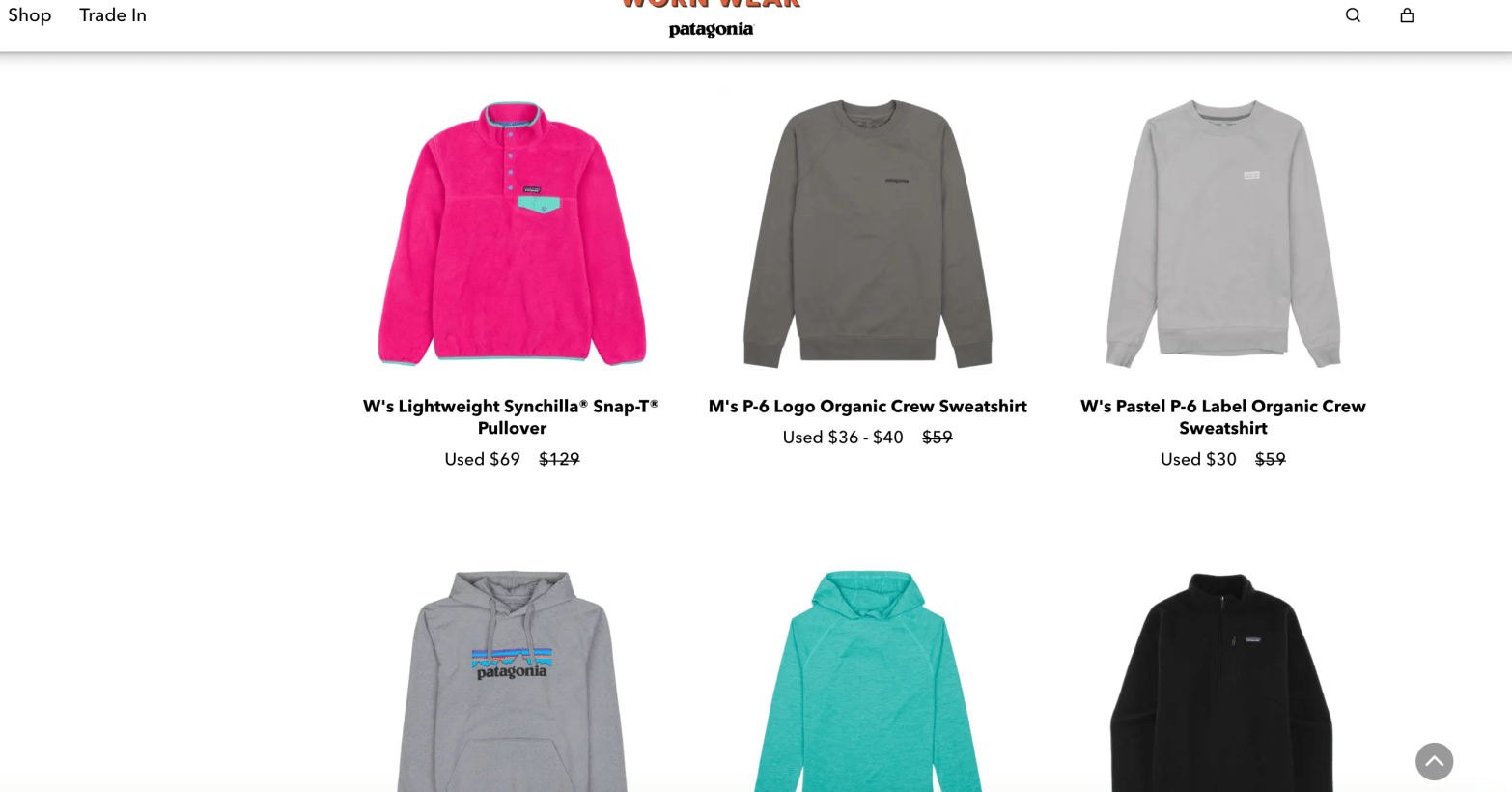
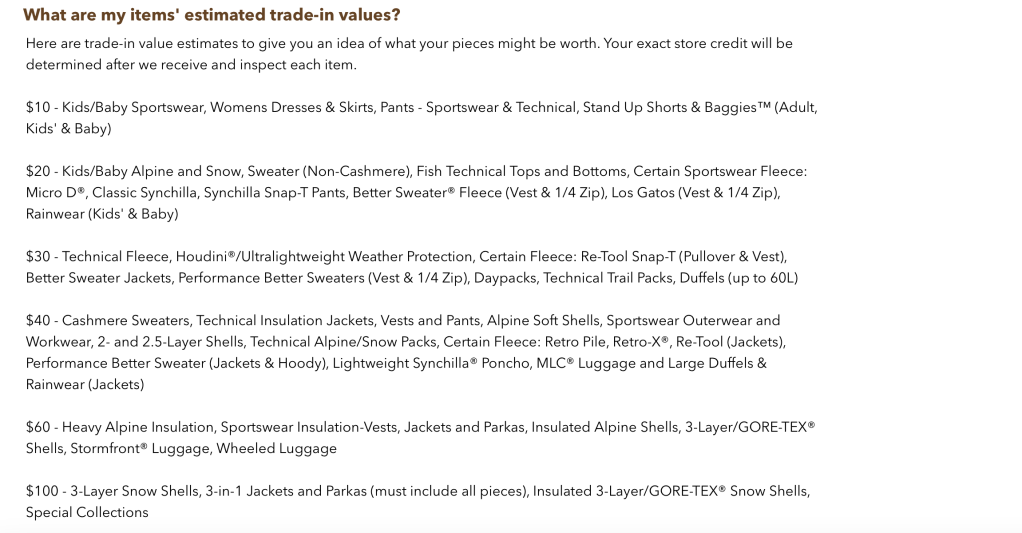
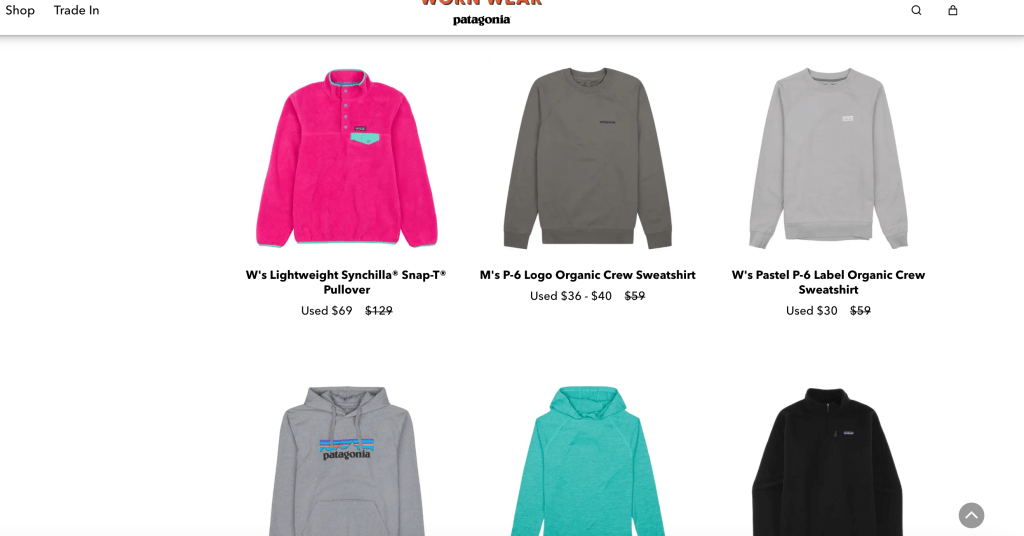
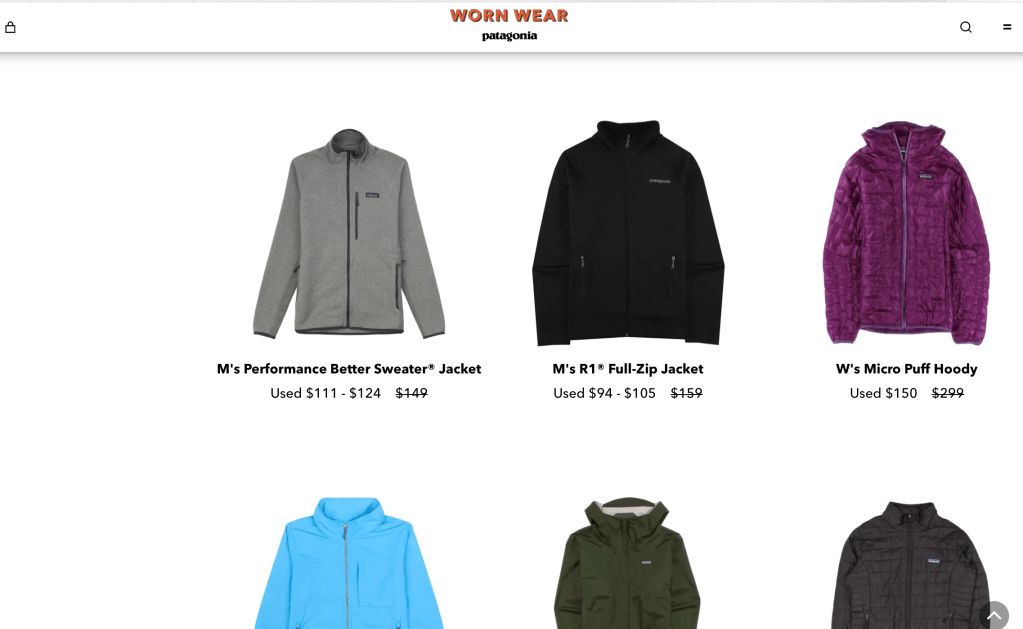
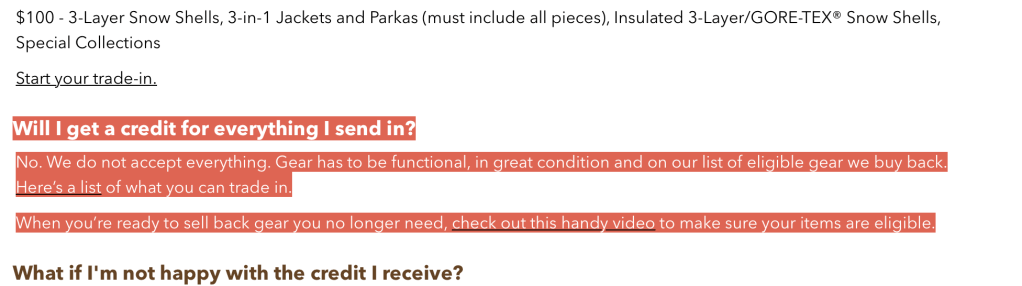
Patagonia, with its Worn Wear program, has a very user-friendly website, and the prices seem fair for both buying and selling. The bonus is that you can find rare or unique colors and discounted styles. I’ve purchased several items from them and love everything about it. Some items may seem a bit pricey, but in general, you can find great deals. They are also transparent about what you can trade in.
Below you will see how much you’ll get for your items.
Lululemon: Lululemon Like New
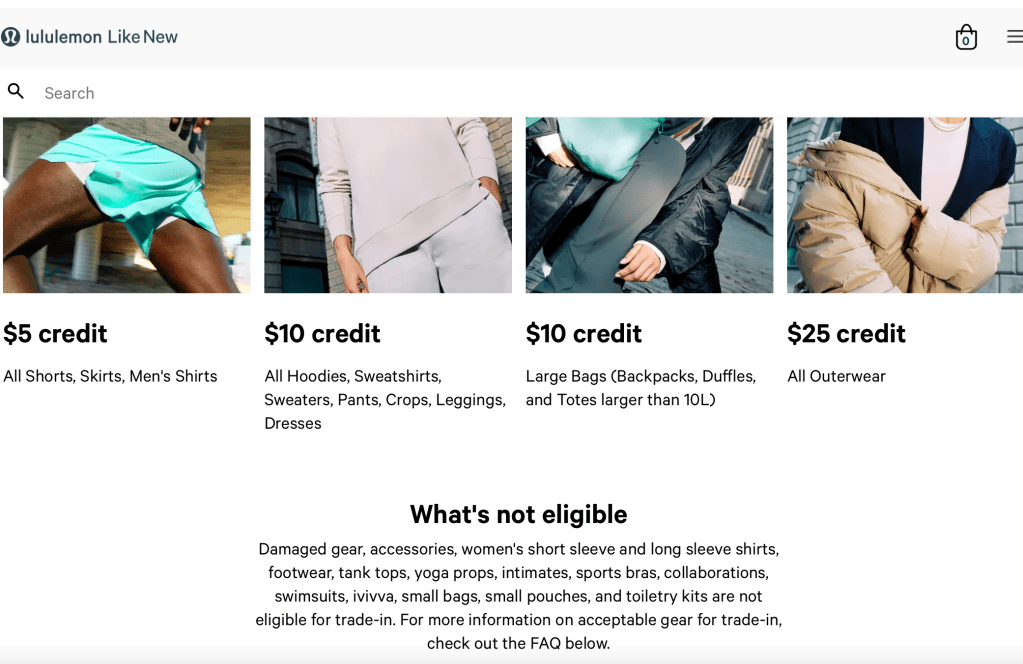
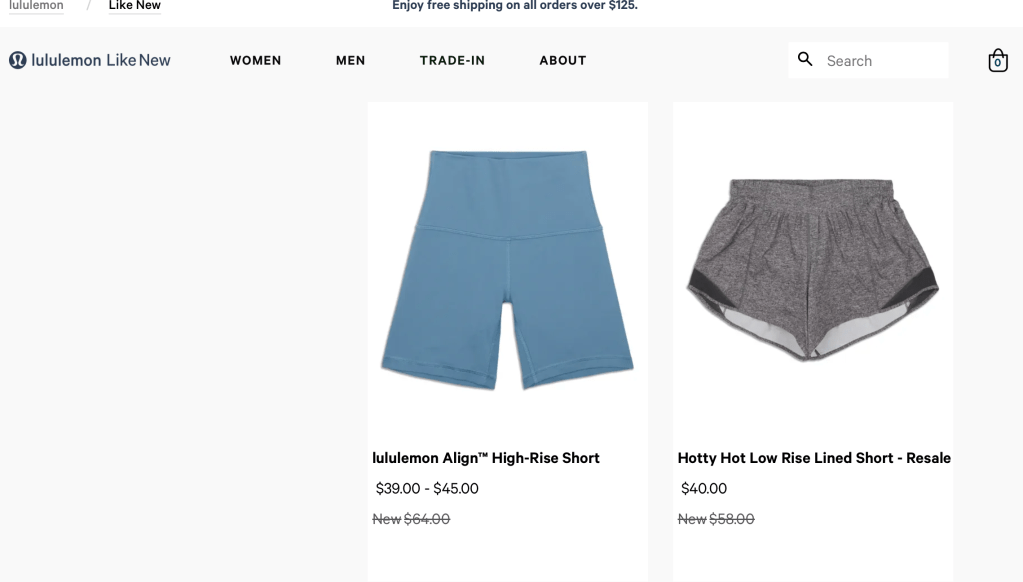
In general, I like the idea because Lululemon products are of high quality and can last for most of your life. It’s obvious that we get bored and want something new from time to time. As I mentioned earlier, the website can be a bit of a mess. If you’re looking for something specific, you might need to search for hours because items can be hidden who knows where on the site. This definitely requires more work from the brand. They take your items, photograph them, and put them on the website, which is a lot of effort. It might be easier to ask people to find their products from a catalog, in my opinion. Yes, they describe what kind of imperfections gear has, but you still can not see it on pictures, so I can not get why they taking pictures, as they just could use old pics from catalog or ask people take pic.
However, the huge bonus is that you can find items here that are no longer available, rare colors, and collaborations, Lululemon Lab. They have a wide variety of stuff.
As for prices, well, it depends. Most of the items are in really good condition but cheaper than buying them new. I’ve bought a lot of Fast and Free shorts from them and other stuff, and I have no complaints; I love the gear. But it can be a bit expensive. I think they should sell it for at least 50% off the original prices. Sometimes, gear can be sold here at higher prices than at was listed during sales. So when you bought the item at full price, but when you want to trade it in, you only get a small amount of money as store credit, often not even enough for a pair of socks. Then, your clothes will be sold at pretty high prices, sometimes higher than they were during sales. Yes, all the profit goes to support initiatives like the Apparel Impact Institute’s Fashion Climate Fund, which aims to reduce carbon emissions by 2030, but the trade-in value for sellers is quite low.

Arc’teryx: Arc’teryx ReGear
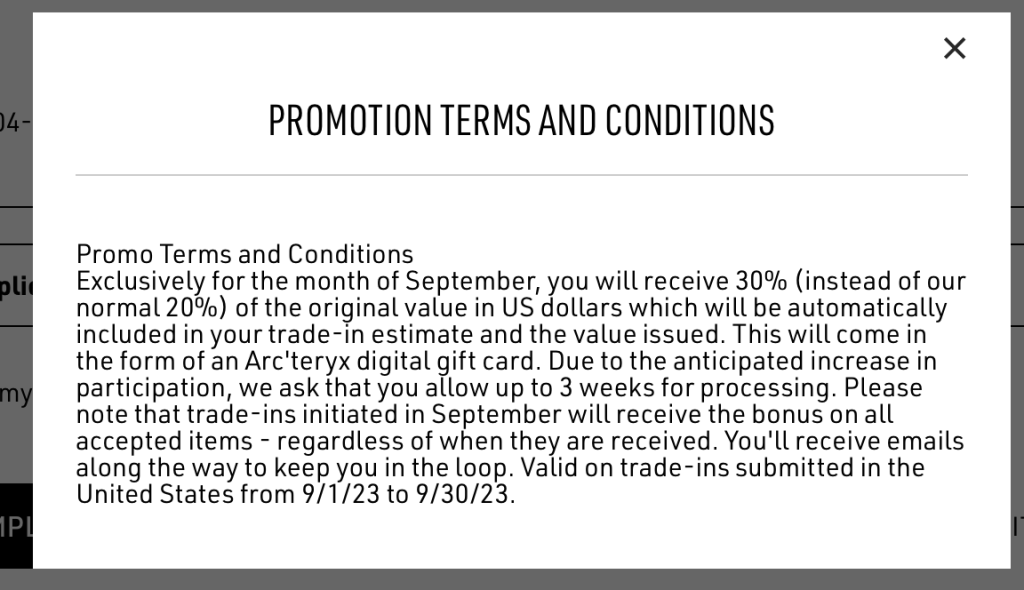
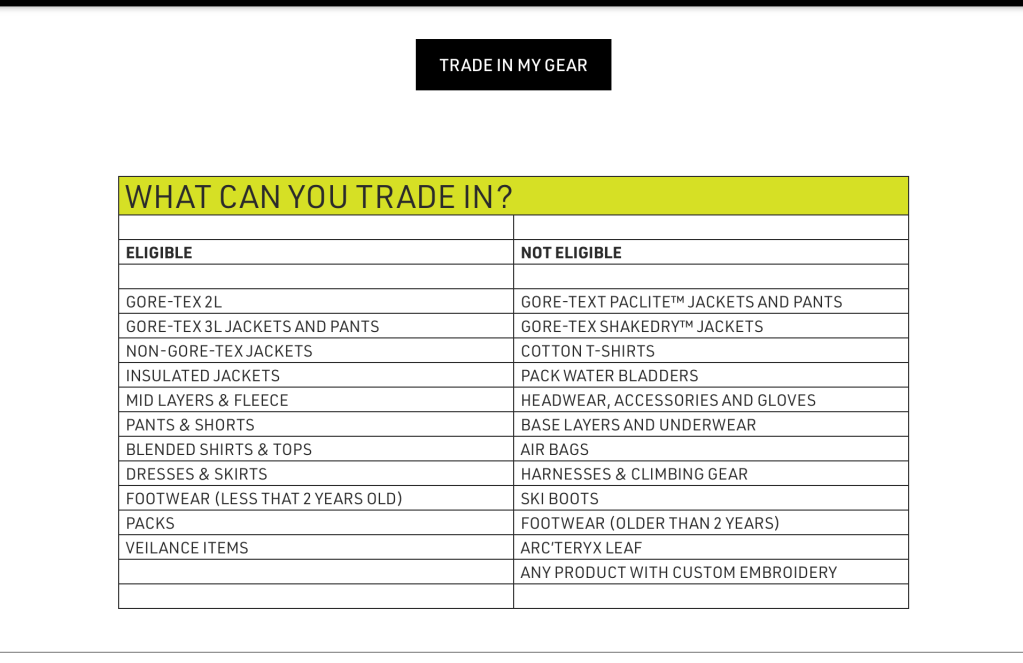
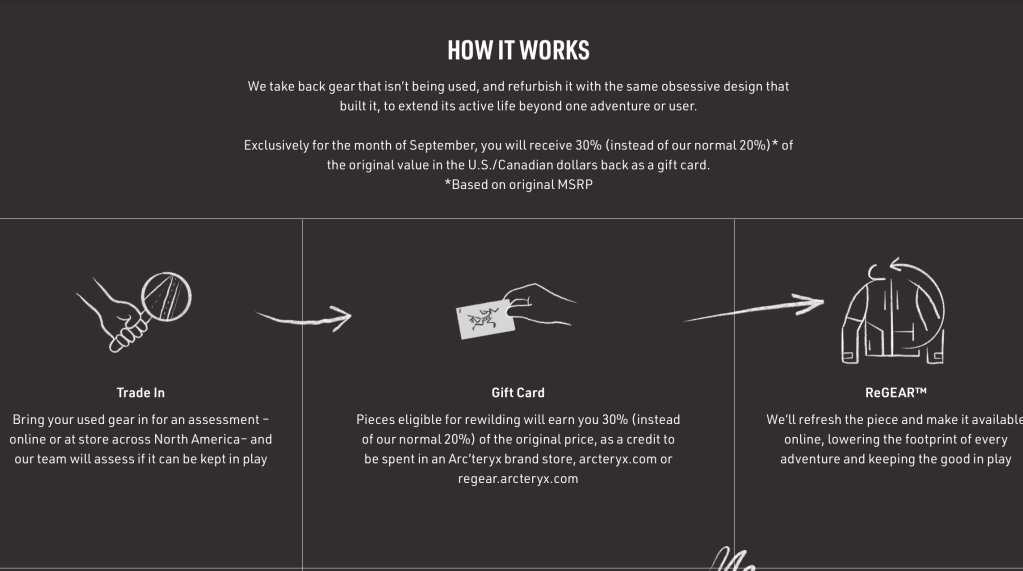
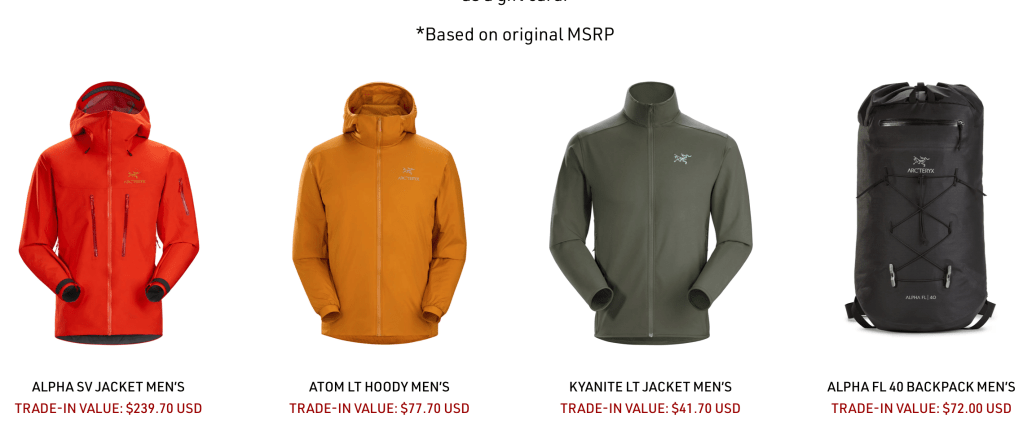
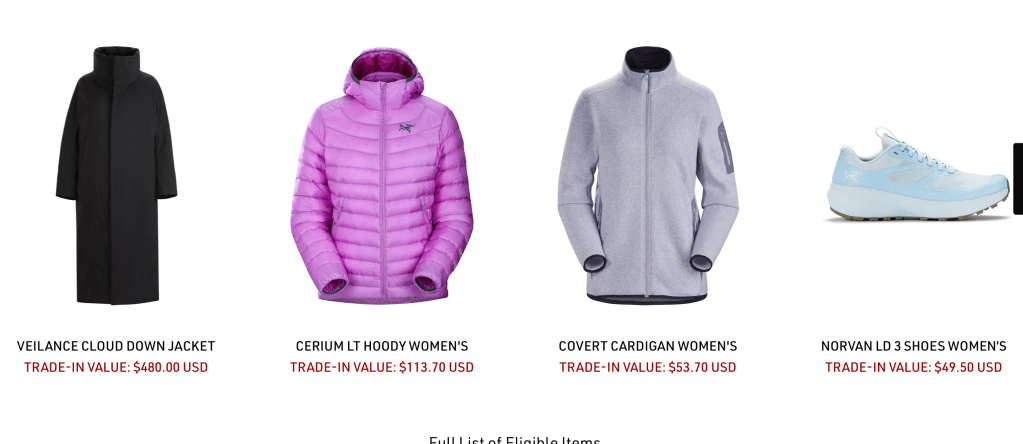
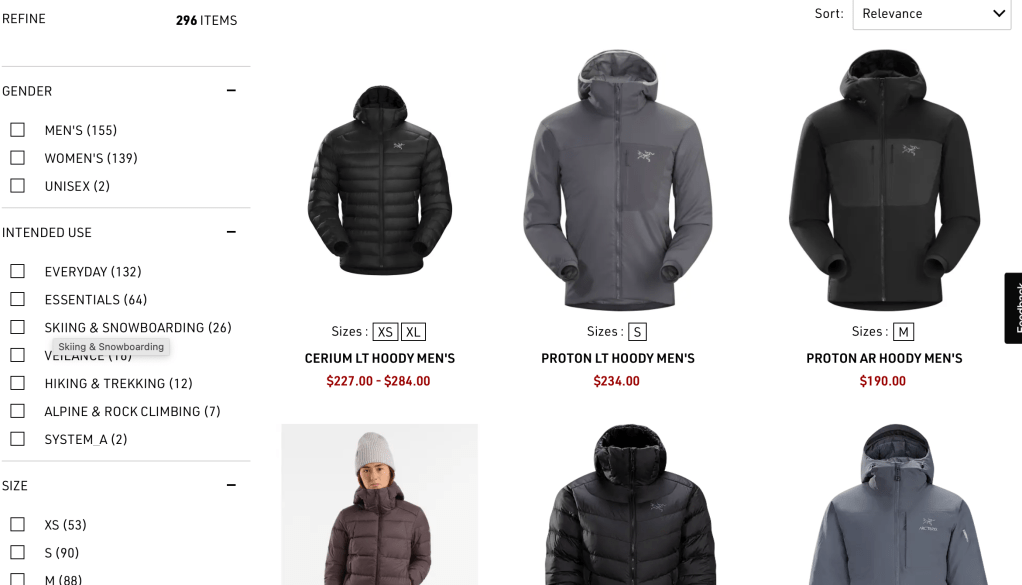
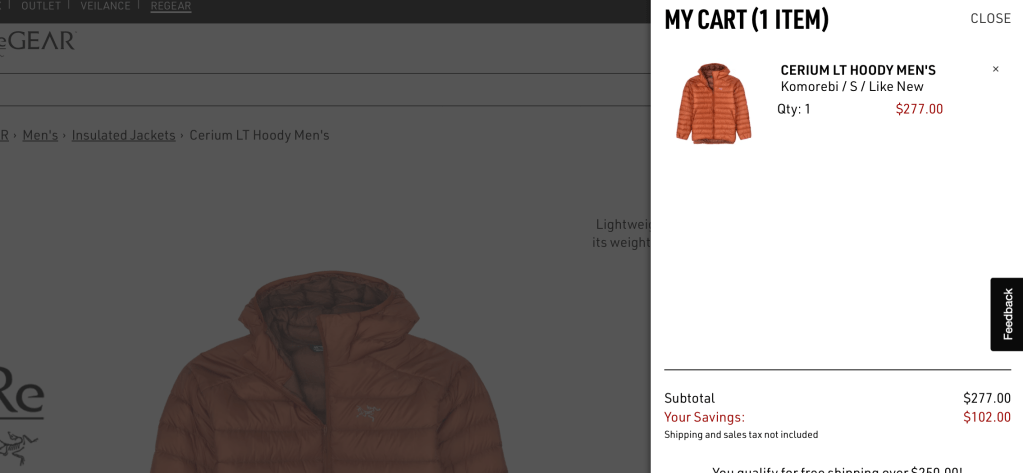
Arc’teryx has recently launched the Used Gear program, allowing customers to sell their lightly used Arc’teryx products back to the brand in exchange for a gift card for 20% of the original retail price of that item. Arc’teryx will then refurbish these items and sell them on a special section of their website at lower prices. While the 20% return rate may seem low, they occasionally offer promotions, like the 30% back in September 2023. However, you only receive a gift card, not cash. Prices on website is ok, could be low though. I ordered one item, but seems like it lost, so I had more negative experience now.

The North Face: The North Face Circularity
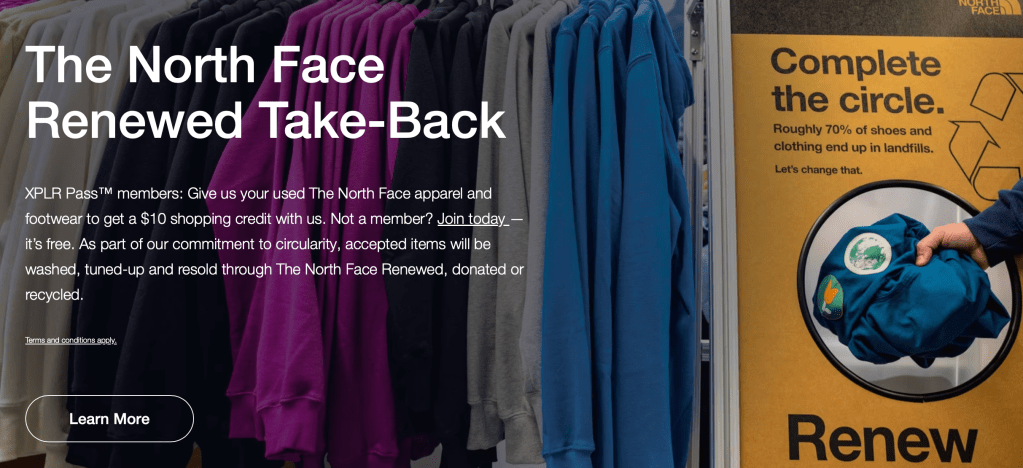
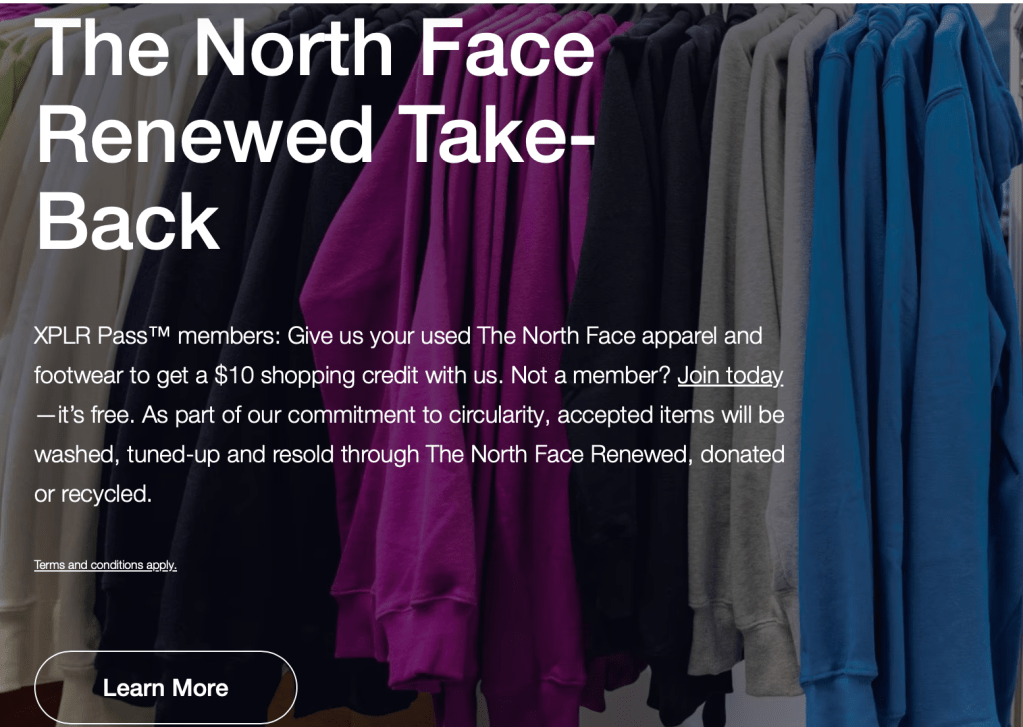
The North Face program called “Clothes The Loop,” which focuses on donating used gear. Customers can bring gear to a retail or outlet store and receive a $10 credit. The idea of recycling materials back to the brand is great, but it could be expanded to include all recyclable clothing. This way, the brand could make new items from returned clothing, reducing waste. I did not get it fully, because seems like they accept all gear, but at the section SHOP Circularity you can find just few items. So clearly they are not resell the items, but remade them. In general the idea is great, but for now is too small. Like I said before a lot of gear can skip some stages and just go from customers back to brands and brands can recycle it to the new items like :
“Alpine Polartec®Performance fleece that’s recycled. And recyclable when you get it back to us.”
Still not clear what TNF exactly doing, but we will see.
There’s a lot to say about the merits and drawbacks of these programs, but the main drawback for me is that sellers receive very little for their items. Let’s think about it: if an item originally cost $100, most stores will give you a $10 or $20 credit, not cash, even if they sell your item for half its value, say $50. So you end up with only $10 or $20 out of $50. If you decide to sell your item on platforms like Poshmark or Depop, you could get $40 or more and buyer will pay same price. With Lululemon it is less, at least they donate all the profit, so it can be consider charity from the sellers side. I understand that brands may need to repackage items and add new labels, but in my opinion, the most ideal system is the one used by Pangaia, where sellers set the price and can choose what sellers want: credit or cash. Seems more fair and people would selling more at this case.
 Live an Active Lifestyle