I did this project for my Environmental Psychology class in college. I decided to post it here, as recently I found out a lot of people have no idea what is micro plastic and why this problem is so huge. In following posts I will write more about microplastic problem by itself.

Problems
Overwashing of clothes, which is one of the elements of modern culture, leads to a number of environmental problems that our society faces now.
According to Fashion Revolution – a quarter of an item’s carbon footprint comes from washing. To top it off, each time you run a washing machine over 700,000 synthetic microfibres enter our already plastic filled oceans. (Home, 2021)
- Releases chemicals into waterways
Harmful substances hidden in common detergents. The business is that detergents do not completely biodegrade, and they pollute our water resources, rivers and oceans with toxic heavy metals such as cadmium and arsenic.
Surfactants, which help soil to float away from garments, form a micelle that surrounds the piece of dirt and carries it away. Micelles are toxic to fish because they get into fish gills and impair their ability to get oxygen from the water.
In addition, phosphates, a common ingredient in detergents, directly nitrogen, reacts with the phosphorus in the water when it reaches the groundwater and this leads to a process of eutrophication, the creation of nutrients that stimulate the growth of algae in fresh water. Those algae begin to actively grow and thereby limit oxygen for other inhabitants of the water bodies. Over time, this slowly depletes the oxygen in the body of water, destroying the ecosystem.Phosphates were banned from United States-produced laundry detergents in the 1970s so they are not a severe problem. Even knowing which chemical compounds to avoid can be difficult because they are seldom listed on labels. While some manufacturers list every laundry detergent ingredient on the label, most do not because it is not required by law in the United States. However, with a little effort, you can visit each manufacturer’s website to view a list of complete ingredients.
- Laundry is water and energy-intensive
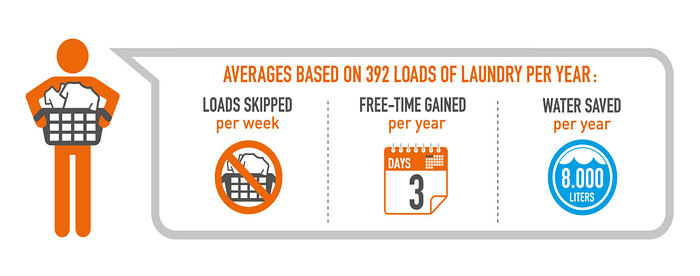
Washing machines account for 17% of our home water usage, around 19-30 gallons and a quarter of a garment’s carbon footprint over the course of its lifetime comes from cleaning it. And yet, washing machine company AEG estimates that 90% of clothes washed aren’t actually dirty enough to be thrown in the laundry basket. However, Energy Star models use less the amount of water per load. ENERGY STAR certified washing machines use an average of 14 gallons of water per load
- Releases Microplastic into waterways
What id Microplastic? Things are less than five millimeters in length (or about the size of a sesame seed) are called “microplastics.” Other plastics are intentionally designed to be small. They’re called microbeads and are used in many health and beauty products. In 2015, the U.S. banned the use of microbeads. But microplastics are still a huge problem. A study of tap water in different countries showed that 83% of the samples were contaminated with plastic fibers.
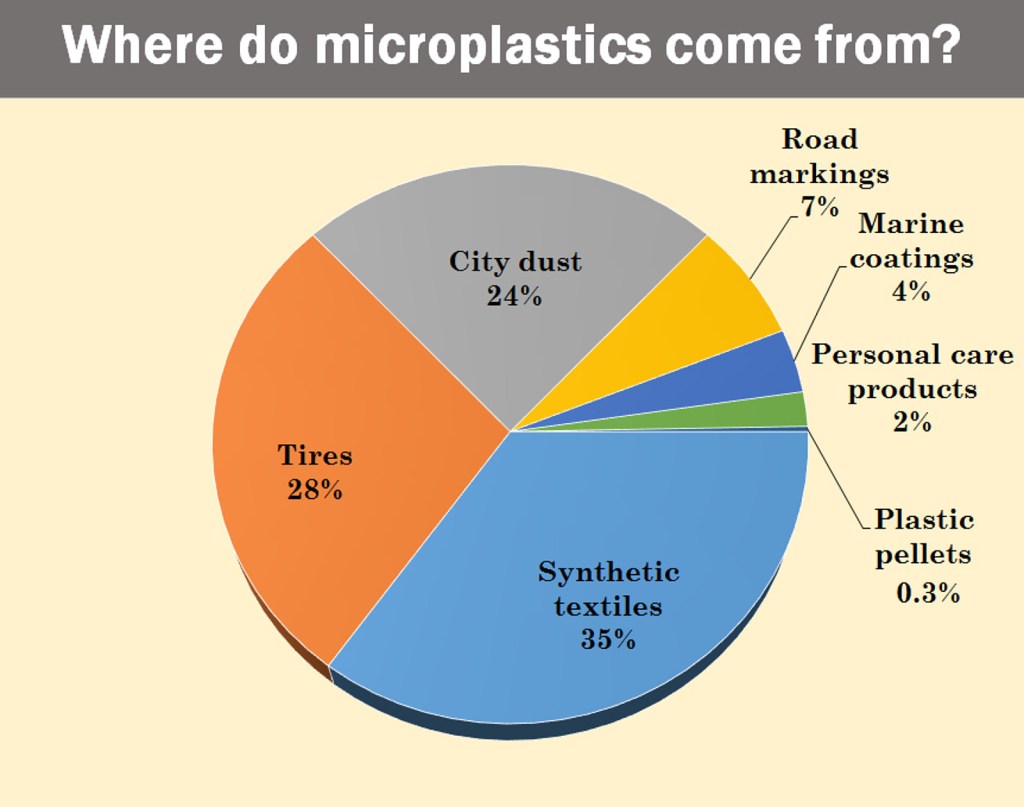
Synthetic textiles are the single greatest contributors to engineered microplastics in the ocean, accounting for 35 percent of the total volume.
Polyester, nylon, acrylic, and other synthetic fibers make up 60% of the fabric content of our clothes. Synthetic microplastic fibers are cheap and versatile. The fibers create stretch and breathability in activewear, and warmth and sturdiness in winter clothes. With each wash, synthetic fabrics shed thousands of plastic particles, which leads scientists to find it everywhere.
- Reduces the life of the garment
According to Fashion Revolution 25% of the carbon footprint of a garment comes from the way we care for it. On top of that, 90% of our clothing is thrown away long before it needs to be, due to our culture of ‘fast fashion’ and outdated laundry habits. It’s time for a change. (Home, 2021)
According to new research consumer research by sustainable clothing brand Icebreaker found one-third of Australians put on a laundry wash three to four times a week and 49 per cent washed a T-shirt after one day of use. Icebreaker executive Carla Murphy said: “We challenged people to wear our shirts for seven days straight, in every aspect of their life and tell us what happened.” The company uses merino wool, which is odour-resistant. “We had a ridiculous response of people wearing it and I don’t recall anyone complaining [about the smell]. When people are looking to make changes, they don’t think about their clothing in terms of the environment.” (Bungard, 2019b).
Shockingly 90% of the clothes we wash aren’t actually dirty enough to be washed, so we simply just need to wash our clothes less. (Home, 2021)
I’m a laundry addict.
Why we overwashing?
Physiology factors our society.

The main question is why do we wash our clothes more than necessary?
When I started working on this topic and shared it with friends, it turned out that in each pair there is a person who washes jeans after each wear. So, why we are obsess with laundry and be clean not inside, but outside.
The most important points turned out to be social. People are incredibly embarrassed about smell, not even the strong smell of sweat, but any of their smells. It is not for nothing that the antiperspirant industry is also very large. Washing has also long been associated with ritual, religion, cleanliness, social gatherings, and social recognition. A clean body has always been very important for people, and over time, clean clothes instead of a clean body began to be considered as the main measure of your cleanliness. A clean shirt can solve any problem.
Let’s take a look at a 50s detergent advertising.
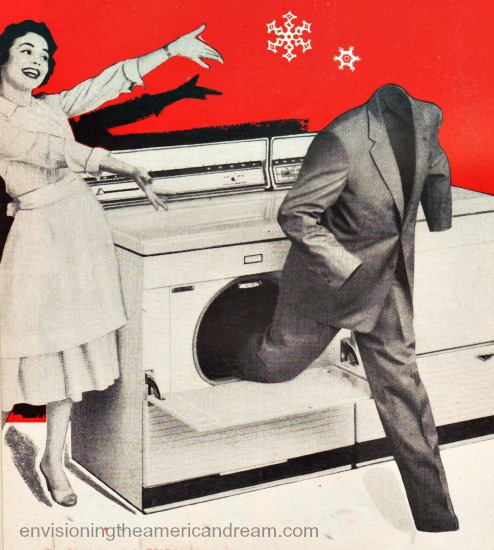
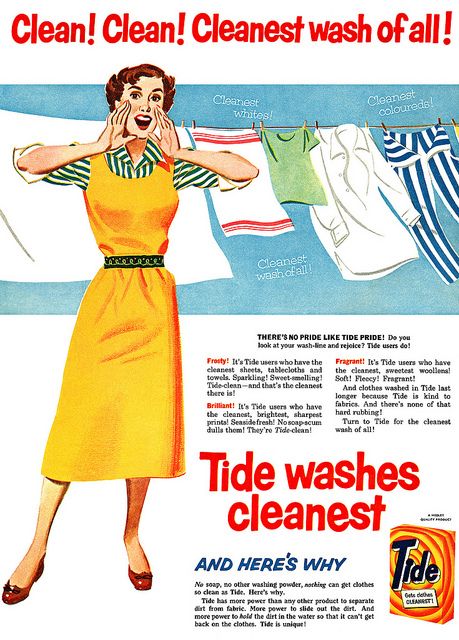


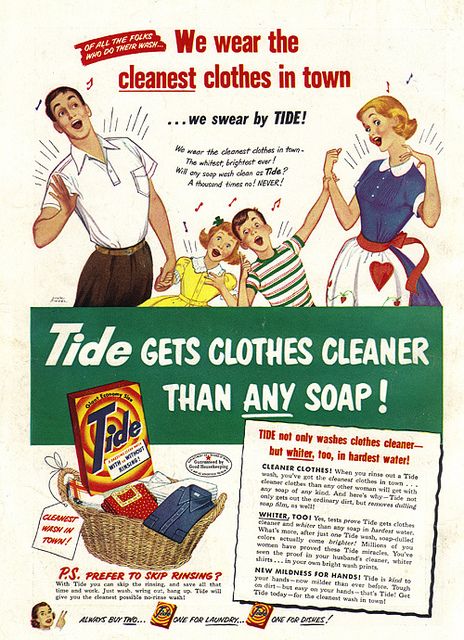


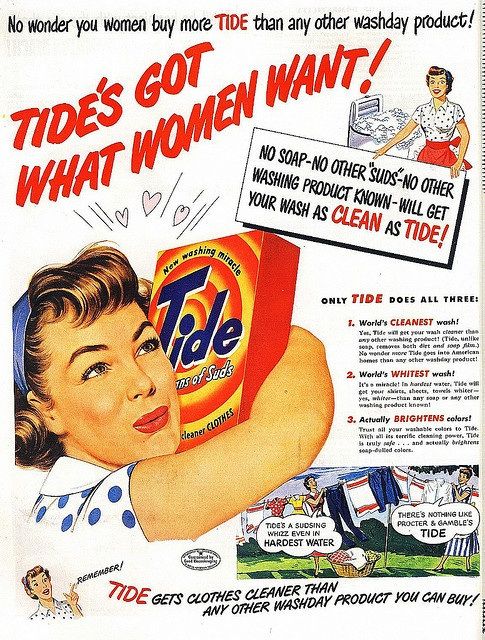
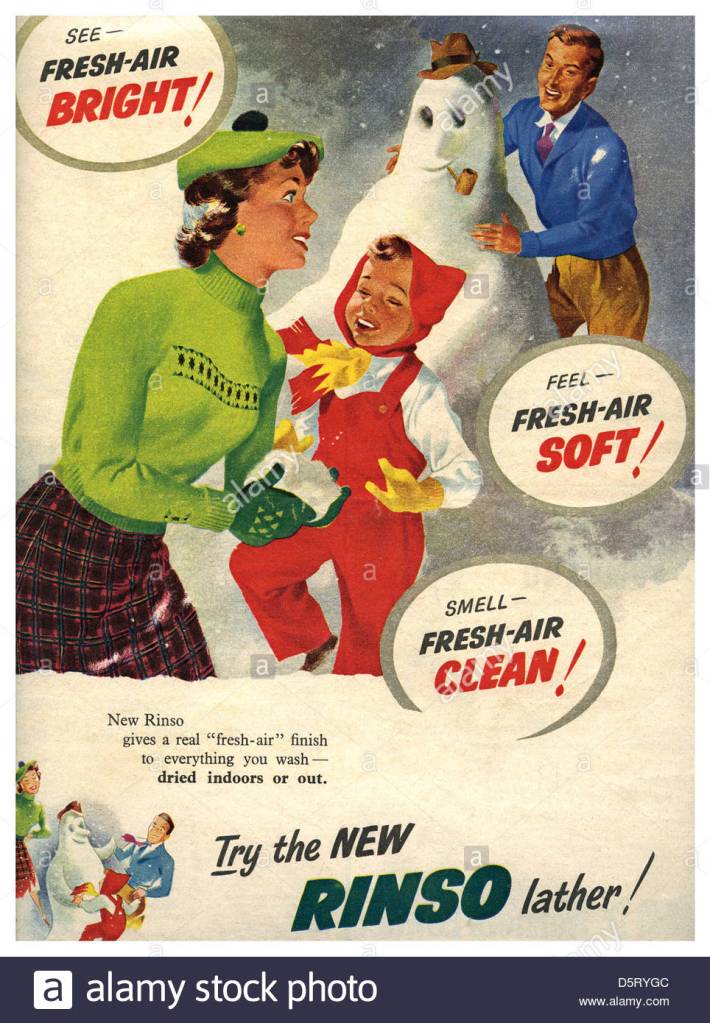
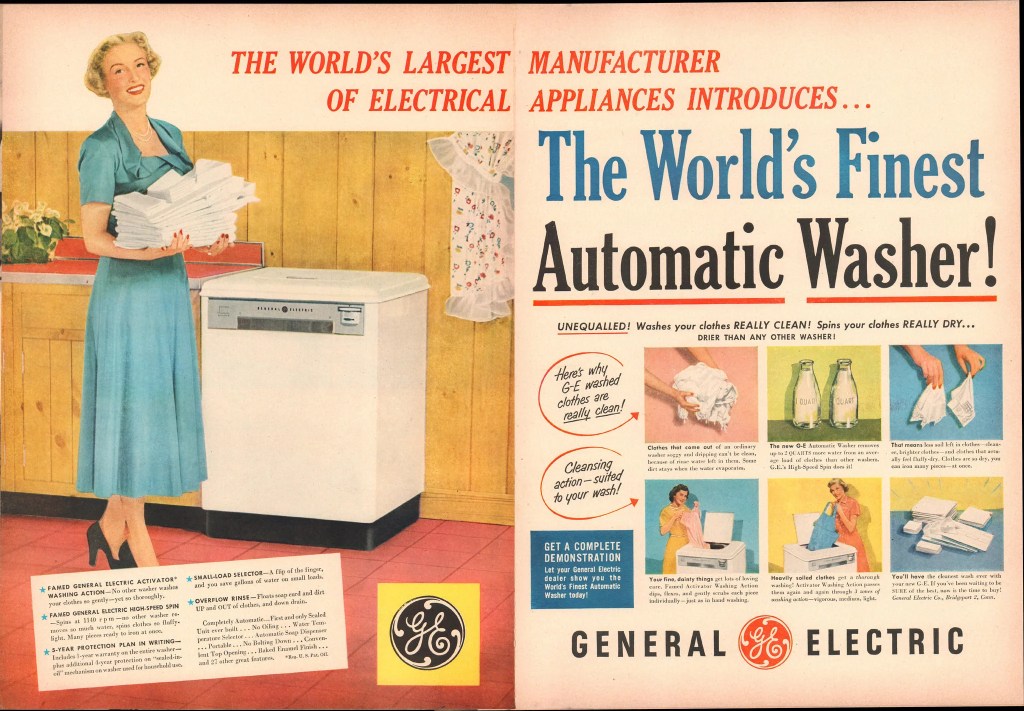
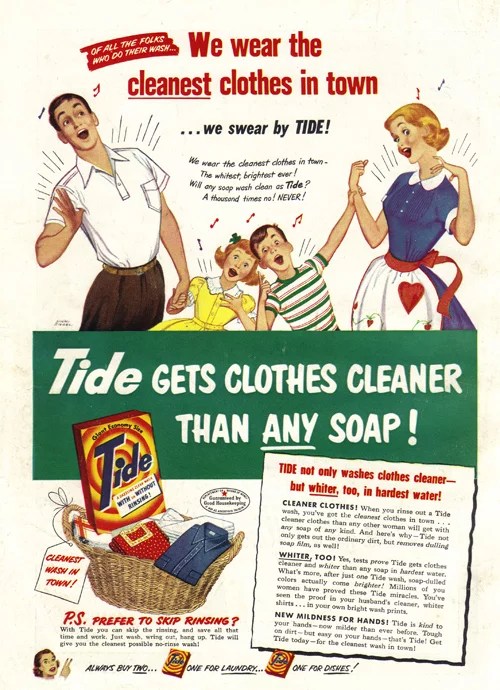
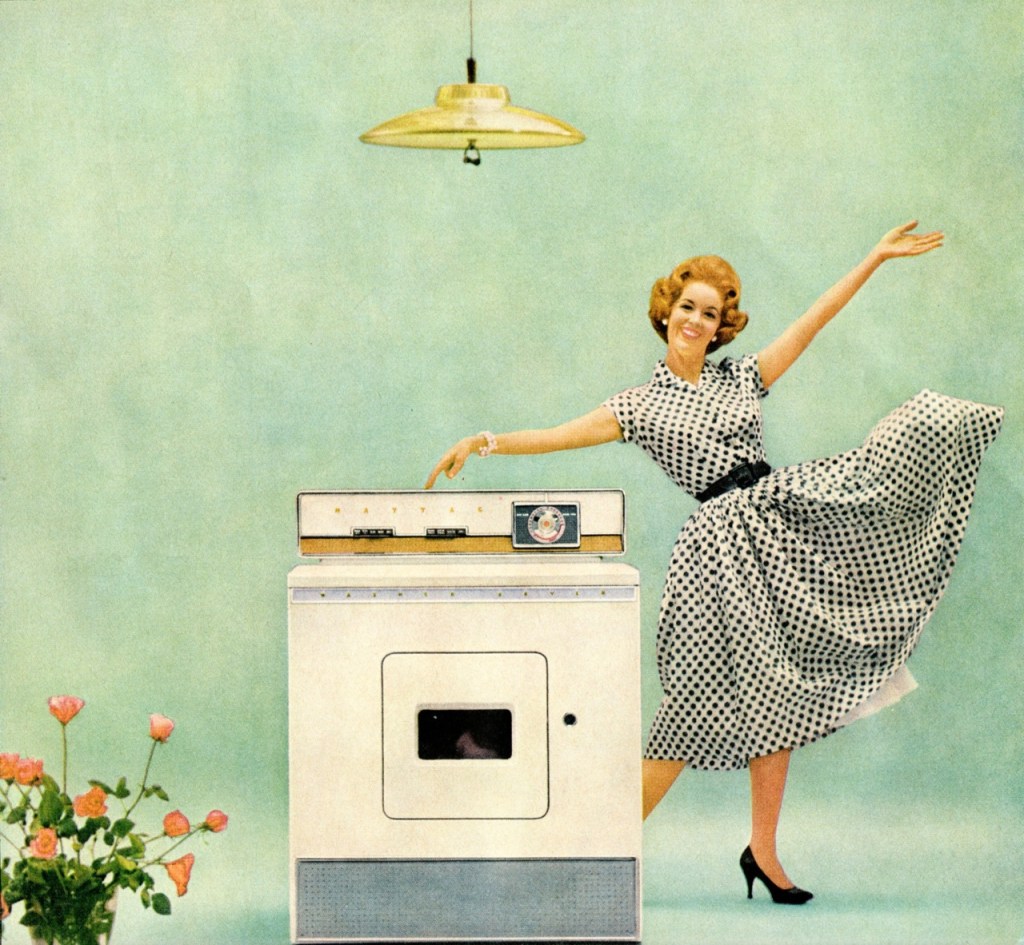
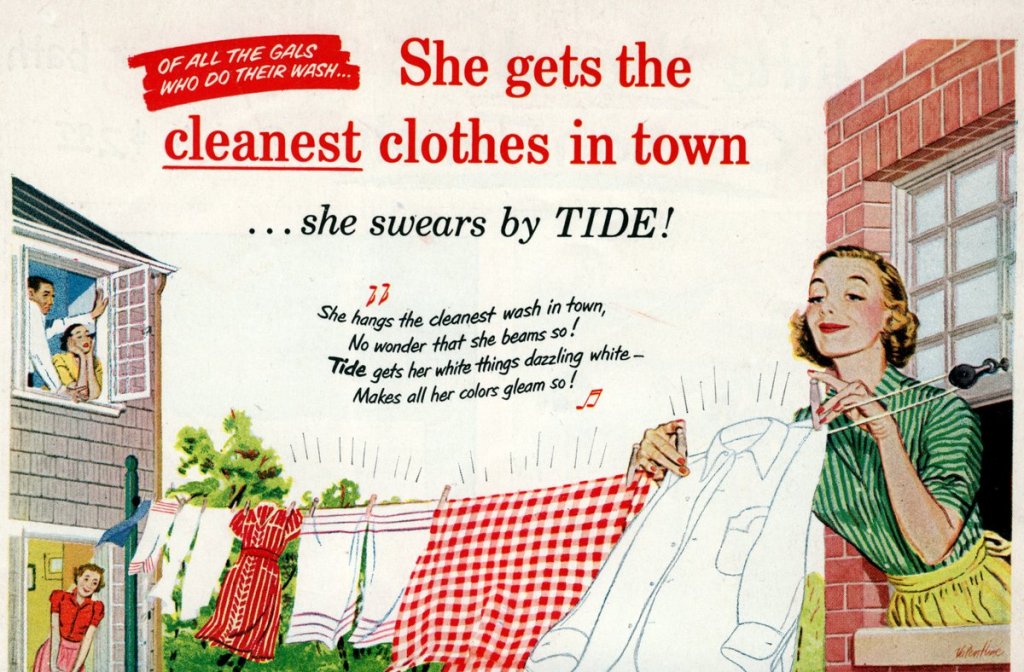
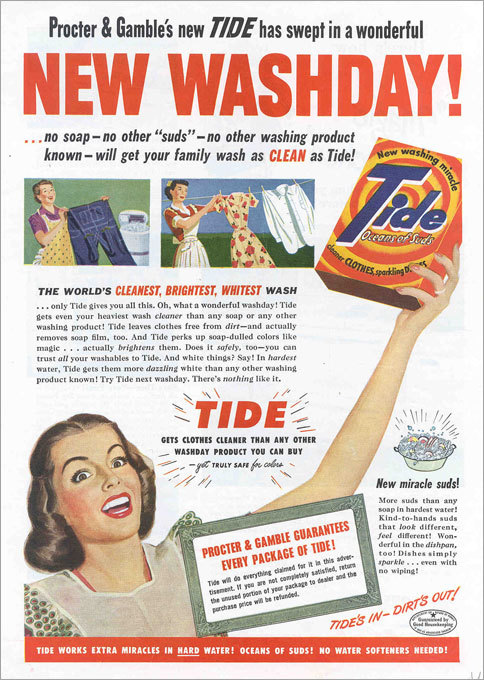
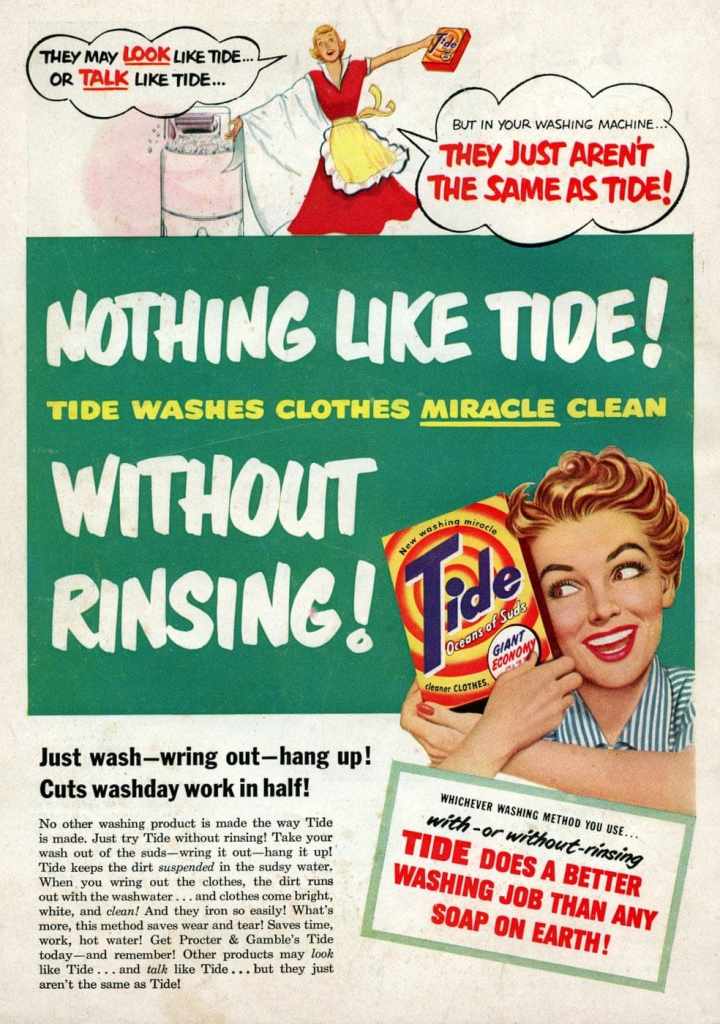
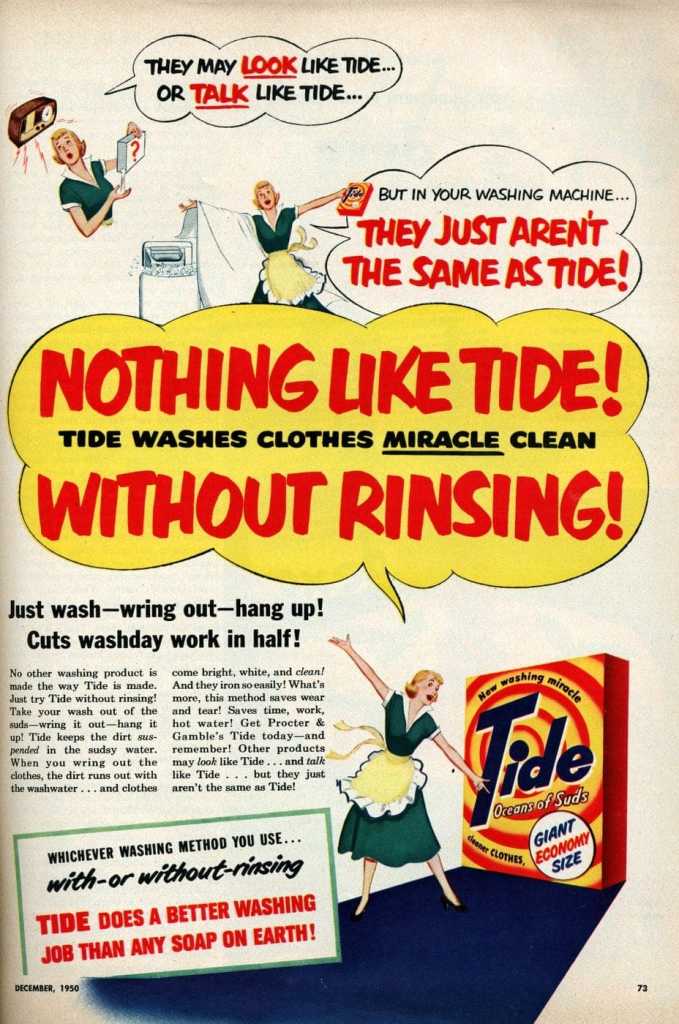
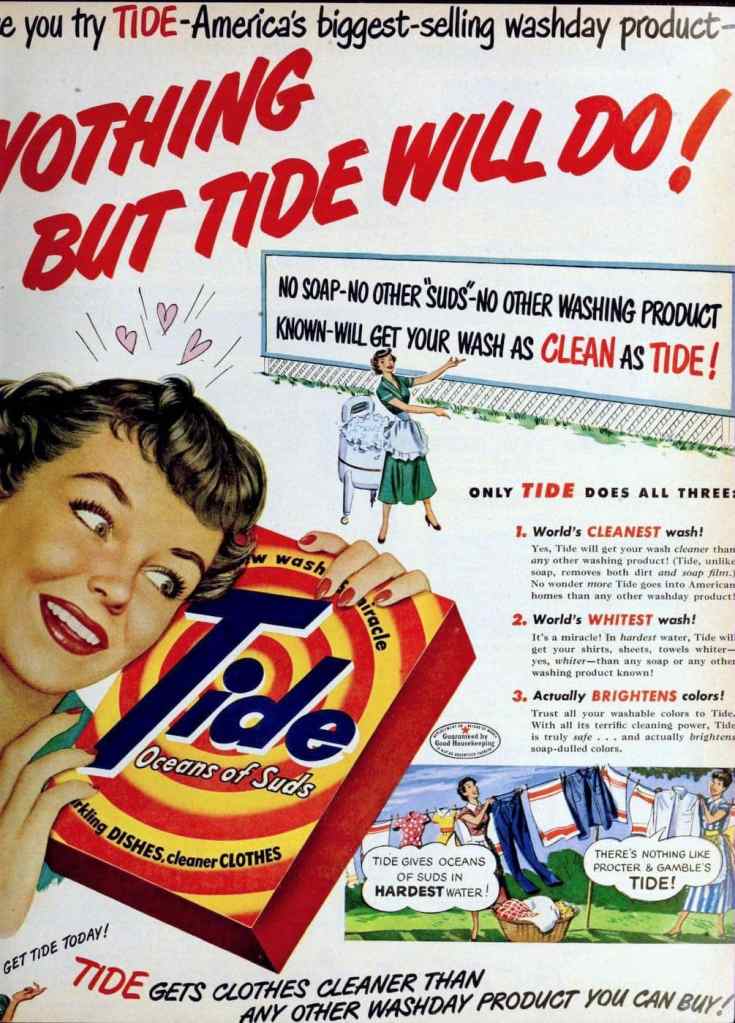
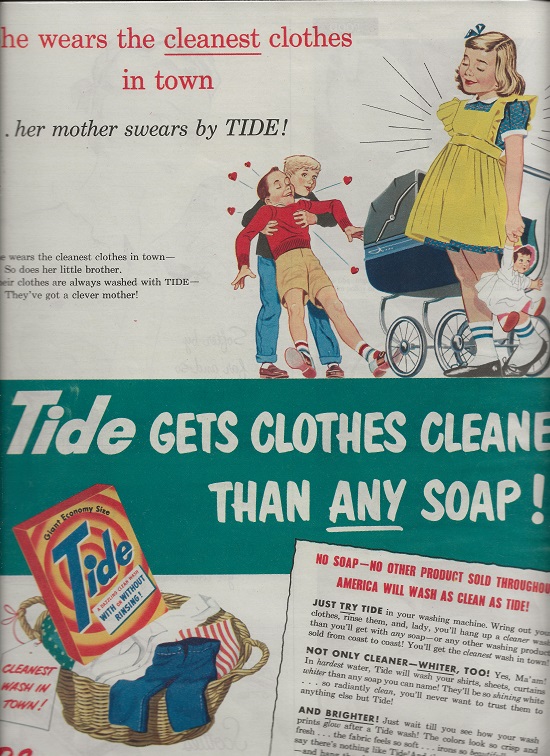
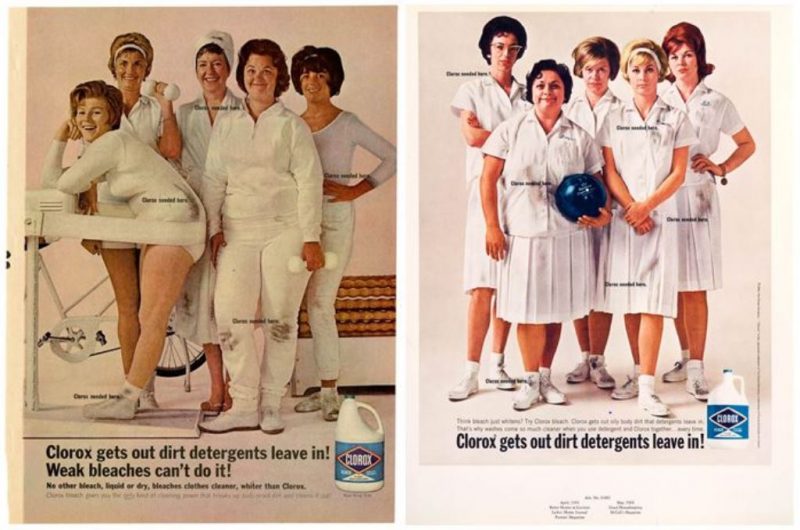
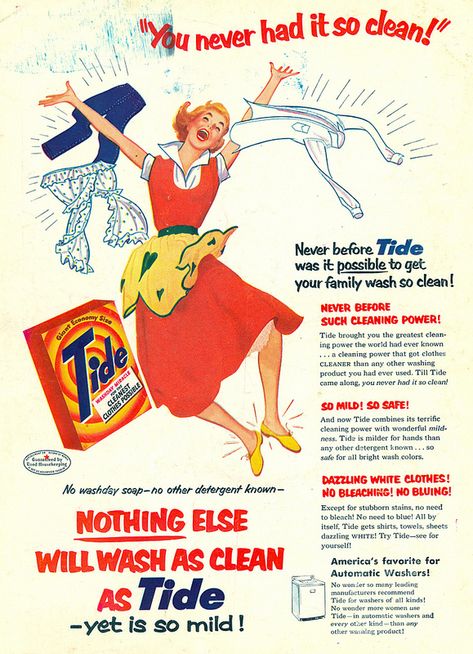
Detergent advertising has been stuck in one of the longest ruts in TV history. It all started after women spent World War II actively engaged in manufacturing and industrial work. When the male workforce came home, America suddenly had to figure out how to get a nation of Rosie the Riveters back off the payroll and into the kitchen.
In general, staying clean and smelling like an alpine mist are good things.
American housewife idea
“In the 1950s, one angle employed to encourage housewifery was to convince women that there was glamor to be found in drudgery. In this Ivory Snow commercial from the period, the home was a “castle,” the housewife was a “storybook princess,” and the laundry was “her trousseau” (which, according to dictionary.com, means “the clothes, household linen, and other belongings collected by a bride for her marriage”). The idea that women were expected to clean all day long is also contradicted in many books and magazines for women that were published in the 50s. From Mrs. America Homemaker’s Guide (1954 – by Wanda Jennings), comes this advice:
“Part of this has to do with the fact that laundry detergent brands have convinced consumers that they need to wash their clothes frequently, perhaps even after every wear, to be clean and hygienic. For instance, many laundry detergent ads show parents washing their children’s muddy and messy clothes, suggesting that good parenting involves doing a lot of laundry.
Mac Bishop, who founded Wool & Prince, saw this firsthand. His first job after college was working for the marketing department of Unilever, which produces dozens of laundry detergent brands around the world. “The only way to grow as a laundry detergent brand is to make customers feel like they need to keep washing their clothes more and more,” he says.
Decades of marketing from the cleaning industry has conditioned many people to throw their clothes in the laundry after one day’s wear, even though this is rarely necessary. So one of the biggest challenges for brands pitching clothes that don’t need to be washed frequently is to convince people that they will not be gross, smelly, or dirty if they aren’t constantly doing loads of laundry.
“It’s important to understand what makes clothes dirty in the first place,” says Bishop.
“Sweat itself is clean. It’s when it gets absorbed in clothing that it begins to attract bacteria and smell bad. So the key is finding materials that don’t trap sweat.” (Bungard, M. S. K. (2019, December 28).
People are also obsessed with removing stains. Advertising and society do not recognize stained clothes as clean clothes. The thing is, you can remove spot without washing clothes.
It is deep in our subconsciousness from advertising and the past that the husband and children should be clean and fresh, and the shirt should crunch like fresh snow, and only then can a person be considered decent and from a good family and so on.
It’s funny, when my friend just moved to the US and will receive his first car ticket, he said that the main thing is to come to court in clean and sparkling clothes, a fresh and perfect shirt is better, only a judge will be able to assess that you are a normal citizen of society.
The jokes that successful people can wear jeans are still very popular today.
Solutions
- Choose and buy clothes that are sustainable. Now there are a lot of such brands on the market, the main problem is the price. In my opinion, a high price can be justified when the quality of things is better and things last a long time. In fact, I can’t say yet that sustainability brands are of high quality, but I think everything is ahead. The same principle one more expensive than 10 cheap seems to me to work so far.
- Wear It More Than Once before wash it. Wearing your clothes more than once before putting them in the dirty clothes basket is the first step in greening your laundry habits. The United Nations Environment Programme crunched the numbers and discovered that you can consume up to five times less energy by wearing your jeans at least three times, washing them in cold water, and skipping the dryer or the iron. Even Levi’s jeans recommend washing jeans every two weeks rather than every day or on a weekly basis.
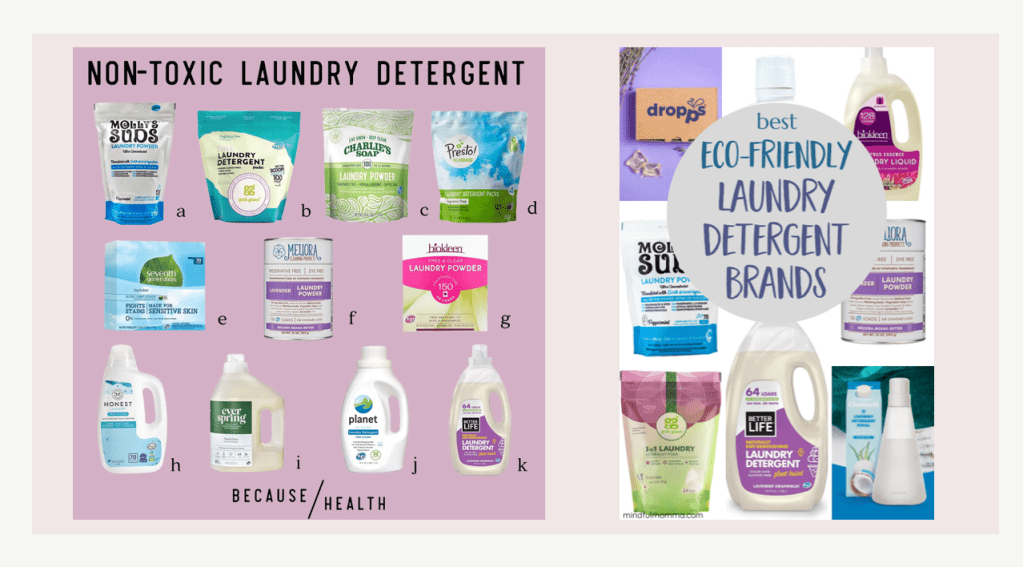
- Use natural detergents. You can find Certified Products and Safer Chemical Ingredients at https://www.epa.gov/saferchoice
- Use a low-water washing machine and avoid dry cleaning. Use Energy Star to find right one. (Products that make the ENERGY STAR Most Efficient list for 2021 deliver cutting edge energy efficiency along with the latest in technological innovation. They represent the year’s very best for energy savings and environmental protection.)
- Re-use Towels. Towels do not need to be washed after each use. Washing your towels when they actually need to be washed is a much better use of water than daily loads.
- Use Less Hot Water. Use warm or cold water when possible, and you instantly save on water energy costs.
- Run Full Loads.
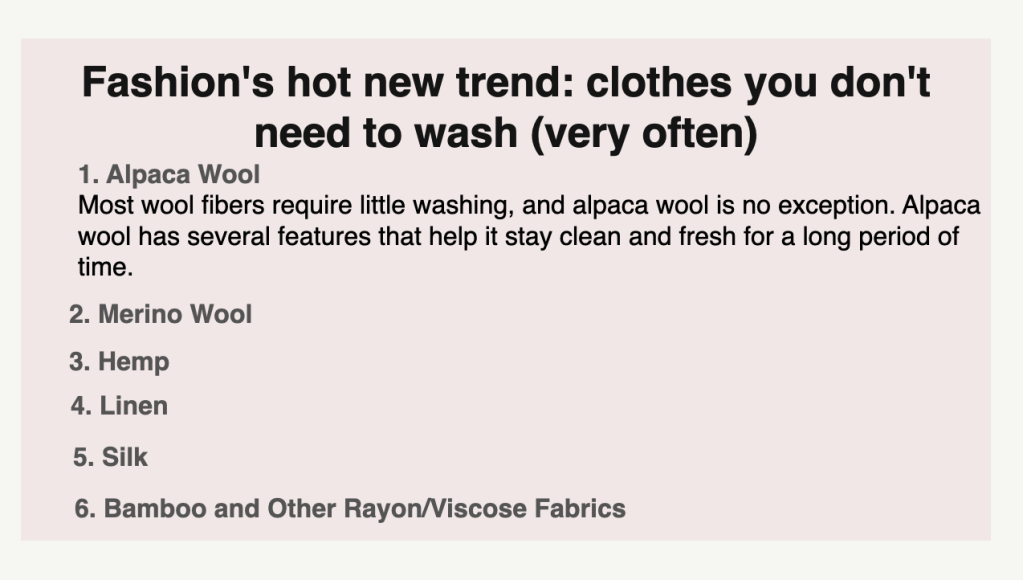
- Designing clothes that require less laundering.
- Better education: CONVINCING CUSTOMERS TO STOP DOING LAUNDRY. In fact, all these brands wrestle with how to convince customers to wash their clothes less frequently without grossing them out. While the fact that their products require less care is a key part of their value proposition, none of these brands lead with the message that customers don’t need to clean them. “We risk turning the customer off by making them feel like we’re suggesting they be less hygienic,” Bishop says. “We’re going up against years of cultural conditioning here.”
Examples of the solutions
Pangaia
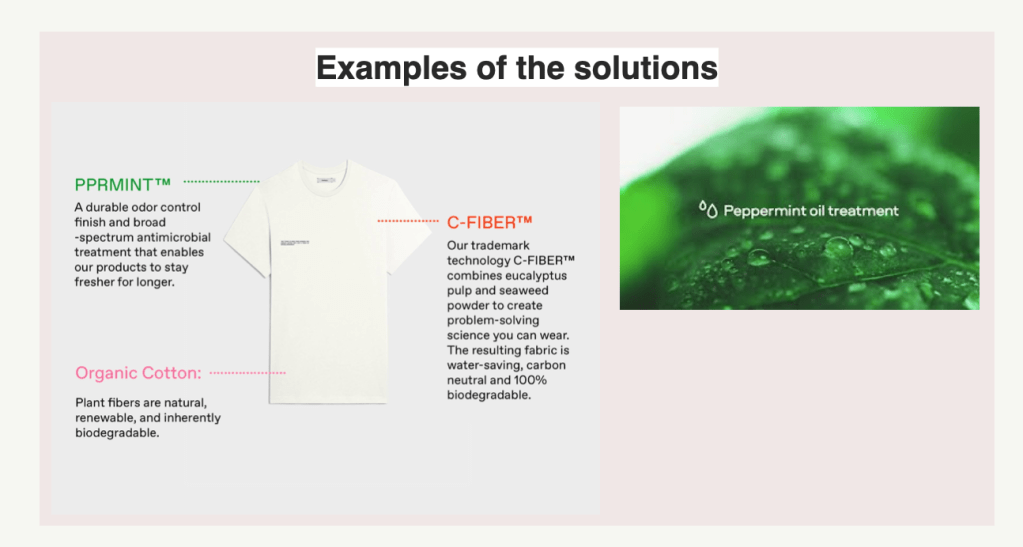
Sustainable brand from the UK not only grows one tree for each item purchased, but also uses peppermint in their fabrics so that things can last longer. They tell customers how bad it is to wash things often. Also, now they write on their clothes that they can be washed less often.
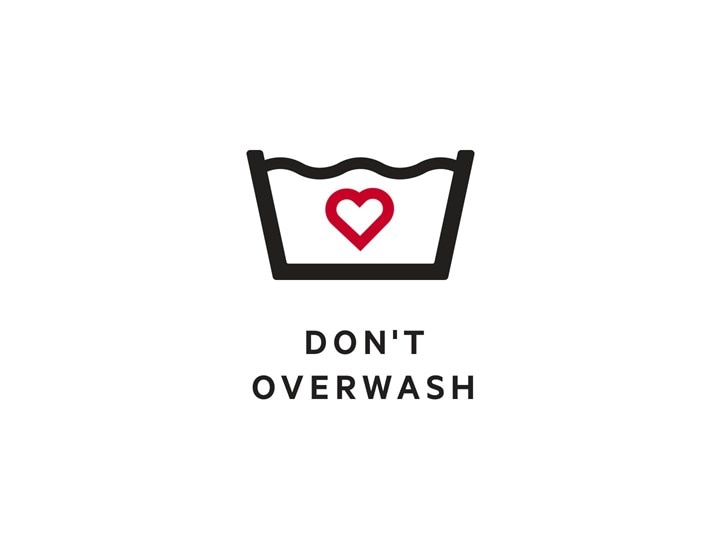
“DON’T OVERWASH” Project
“With The Care Label Project, we’re turning this around. To start, we’re launching a completely new care label – “Don’t Overwash” – alongside an exclusive collection of designer garments with lab-tested care advice and a modern fabric care guide. Join us in changing the future of fashion, one care label at a time. The Care Label Project is creating a new care symbol – Don’t Overwash – to inspire consumers to wash their clothes less, to avoid the harsh and damaging dry cleaning process and to use lower washing temperatures. Don’t Overwash means inviting customers to wash less, and at 40°C degrees or less. AEG has invited fashion houses globally, including selected NJAL designers to implement the awareness campaign within their garments.” Said Han Ates, founder of Blackhorse Lane Ateliers and collaborating designer in the Care Label Project.
IceBreaker
The brand makes things for hiking and sports from wool. Their main idea is that things can not be washed for a long time during the hike and they will not smell due to the properties of wool. This trend has moved from hiking and outdoor to everyday life.
My experience for a start, I decided to wash less often and a fully loaded . I have laundry bags that, in theory, should not allow microplastics to pass through. I have a good washing machine. I also try to use the dryer less often. It is difficult for me not to buy things made of synthetic materials, since I do sports a lot. I contacted the Pangaia brand about the possibility of collaborating and designing runners’ clothes from materials that are not based on fossil fuels. I also run a page on social networks where I tell people about washing and how to make washing more environmentally friendly.
Background articles
Helbig, K. (2020, September 23). Less laundry less often: how to lighten the washday load on the environment. The Guardian. https://www.theguardian.com/lifeandstyle/2018/mar/31/less-laundry-less-often-how-to-lighten-the-washday-load-on-the-environment31/less-laundry-less-often-how-to-lighten-the-washday-load-on-the-environment
Segran, E. (2019, June 7). The next big thing in fashion? Not washing your clothes. Fast Company. https://www.fastcompany.com/90359188/the-next-big-thing-in-fashion-not-washing-your-clothes
O’Connor, M. C. (2016, June 22). Inside the lonely fight against the biggest environmental problem you’ve never heard of. The Guardian. https://www.theguardian.com/sustainable-business/2014/oct/27/toxic-plastic-synthetic-microscopic-oceans-microbeads-microfibers-food-chain
Revolution, F. (2018, April 5). Don’t Overwash: it’s time to change the way we care. Fashion Revolution. https://www.fashionrevolution.org/dont-overwash-its-time-to-change-the-way-we-care/
Bungard, M. S. K. (2019, December 28). Why you shouldn’t wash your T-shirt after one wear. The Sydney Morning Herald. https://www.smh.com.au/environment/sustainability/why-you-shouldn-t-wash-your-t-shirt-after-one-wear-20191107-p538e5.html
User, A. (2020, December 23). Why My Laundry Obsession is a Metaphor For Life: With 2020 Eco Updates. Clean Kiss. https://www.cleankisslifestyle.com/blogs/news/why-my-laundry-obsession-is-a-metaphor-for-my-life
Home. (2021, April 28). Fashion Revolution. https://www.fashionrevolution.org
 Live an Active Lifestyle